
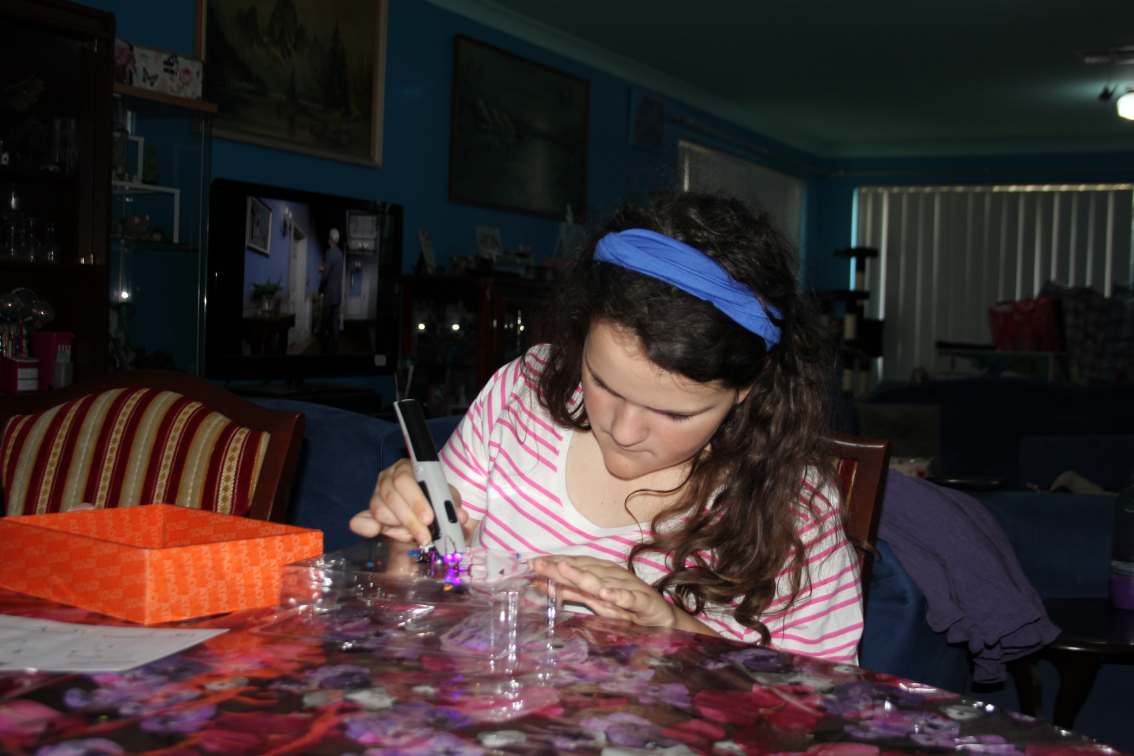
The followers of this blog has helped me in so many ways. Thanks!
But now I ask for more.
My youngest daughter has:

- Autism; an innocuous disorder that causes her no trouble at all. Have you even heard of it?

- She also has a little problem called ADD; Attention Deficit Disorder. Now this may make her look a little odd but it poses no problem for her educationally.

- And finally dyslexia; I believe this means she needs to concentrate a little more in order to read.

- Oh and anxiety, she’s a bit of a worrier, but she should just snap out of that, as soon as she thinks some happy sunshiny thoughts.

Sarcasm doesn’t always cross cultural/language barriers so just to make sure you understand.
- Autism is a serious neurological disorder that is enough on its own to destroy your life.

- ADD means her brain moves swiftly and it is harder for her to concentrate, stay still, or hold onto ideas.

- Dyslexia; this 13 year old with a genius IQ needs to decipher individual letters every time she reads or writes.

- Anxiety, a serious psychiatric disorder that is debilitating and can lead to Clinical Depression and the S word (s–c–d-).

I just received this child’s school report; not bad grades wise (I am so proud), but the comments of a couple of her teachers along with comments made earlier in the year seem to show a problem. Most upsetting to Natasha is her English teacher.

So, and this is where you come in, I have written a letter and I am thinking of sending it to the school. Please let me know what you think.
To _____________,
I am concerned you may be unaware of Natasha’s disabilities and the challenges your subject poses for her. Natasha’s recollections of comments made in class I feel were reiterated in your comments on her report.
As I understand it; you are recommending Natasha slows down her work and concentrates more on spelling, grammar and neat presentation.
If this is your advice to any of your students I am very surprised; it appears at odds with current thinking in many other forums of creative writing tips. Most sources recommend producing a first draft as swiftly as possible, leaving corrections for subsequent edits. Anything that slows down the creative process seems, to me, to be wise to avoid.
Natasha’s case is different; given that she has Autism, Dyslexia, Attention Deficit Disorder and Anxiety. When producing a creative piece of work Natasha’s autism tends to restrict her to a narrow focus, driving her to focus on either creativity or accuracy; not both. Many autistic people; Natasha included, find simple jobs involve significant change of focus; ie. looking for mistakes while composing, requires a great deal of energy and additional time; write, stop writing, calm self, think about correcting, look for corrections, correct, stop looking for corrections, calm self, try to remember where the narrative was going are all separate tasks that must be managed for each switch, each transition making her more vulnerable to distraction and internal confusion.
You may be unaware of the severity of Natasha’s dyslexia. The basic forming and recognition of some of the letters has not become automatic for her. I admit she does it quite quickly; she has extremely high (professional testing not personal opinion). Can you possibly imagine the extra strain this creates during basic writing, let alone when she is trying to create? Multi-tasking never produces the best result and I believe it is a mistake to insist on it; for Natasha producing a better first draft involves considerable multi-tasking.
Since we learnt of the severity of Natasha’s dyslexia I purchased a voice recorder; her therapists have recommended she creates her work and makes notes using this recorder. Sometimes Natasha has difficulty focusing on the voice recorder and needs a pen and paper version, only Natasha can tell which will work on any particular occasion as there are so many variables.
Natasha’s ADD can increase her feelings of urgency. Experience tells her she has a limited time to record her ideas; if she doesn’t move quickly she will lose the idea forever.
ADD and Autism are both conditions that leave their sufferers highly vulnerable to distraction. Sunbeams, butterflies or a bright glinting pen can erase the plans in her head in a moment.
Anxiety also plays a part in making Natasha’s life difficult. In English there is the constant threat of triggers in new material. Her anxiety to do well and not earn your disapproval is very strong. The smallest comment can be blown out of all proportion and fester unseen in her mind until her emotional balance is way off.
Personally, I can not believe how much Natasha has achieved given the severity of the challenges she has faced. But I genuinely believe that the direction you are sending her in would be a terrible mistake.
As her mother I would ask that you encourage Natasha to produce a first draft as swiftly as possible and then get her to edit, preferably on computer.
Yours sincerely,
And as your reward for reading:


Leave a Reply to ZurkPoetryCancel reply